Freedom Isn't Something You Find. It's Something You Design.
Apr 06, 2026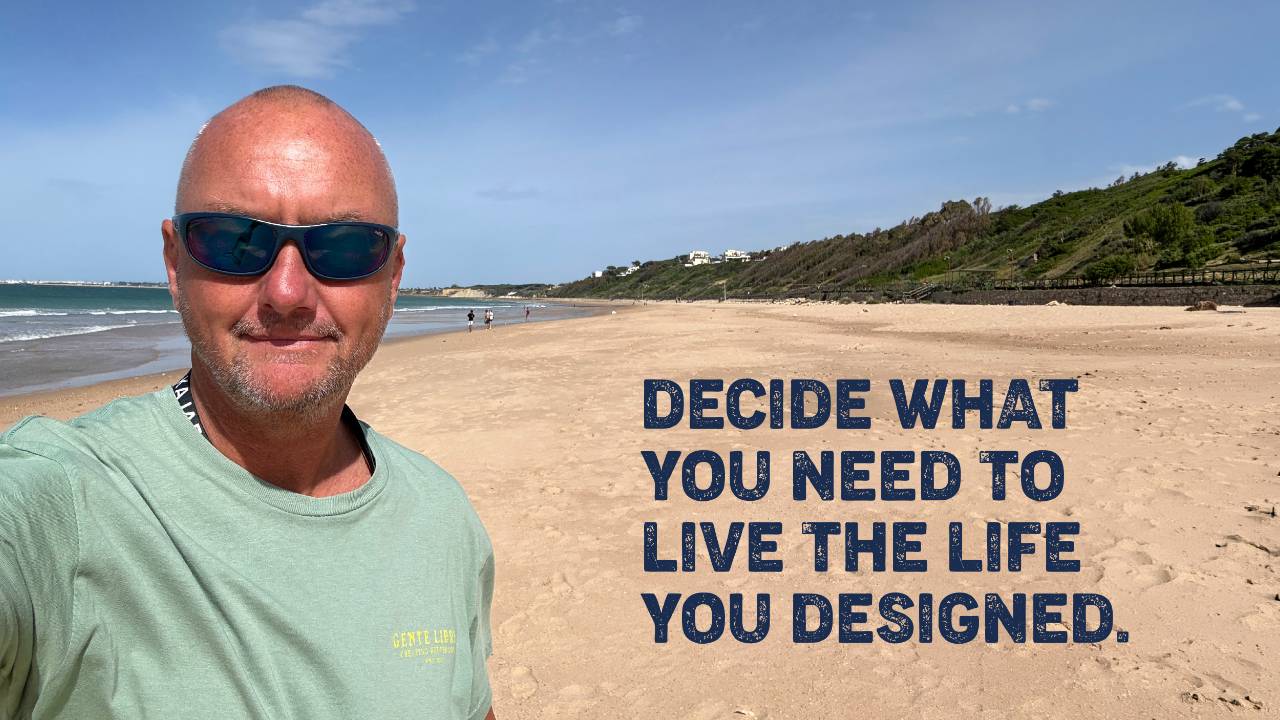
It's Tuesday morning, and the beach is ours again.
Easter weekend brought the crowds, the noise, the restaurants packed, and the car parks rammed to the gunwales. And I worked through most of it. Not because I had to. Because I chose to.
That's a sentence worth sitting with for a moment.
I chose to work Easter so that today, on a random Tuesday in April, I could walk a near-empty beach in southern Spain, grab a coffee in our local chiringuito, and call it a working morning.
It's not a holiday. It's better than a holiday.
And it's exactly what designing your business around your life actually looks like. Not hammocks and passive income. Not "I only work four hours a week." Just the ability to choose, and to move the pieces around the board on your terms.
Most coaches don't have that.
Not because they're not good at what they do or because they don't work hard. But because they built their business by accident.
They said yes to the first client who would have them. Then the second. They set their prices at whatever felt safe. They took the calls whenever the client wanted. And before long, they had a full diary, a decent income, and the growing sense that they'd bought themselves another job.
If that stings a bit, keep reading…
The goal when they started was freedom and flexibility. The ability to choose their clients, set their hours, and work from wherever made sense that week. And somewhere between the first client and the full calendar, that got buried under the weight of just keeping up.
Here's what I've learned in 20+ years of running my own business.
You design your business before you build it, not after.
Most coaches build a business and bolt a life onto whatever time is left. That's not a lifestyle business. That's a job with no sick pay.
The design process runs the other way. You start with what you actually want. Not vague "freedom" or "flexibility." The specifics.
What time do you want to start work? What days are yours, no matter what? What does a good week actually look like when nothing else is getting in the way?
That's your brief. Everything else — your offers, your prices, your client limits, your delivery model — has to fit inside it.
If it doesn't fit, it doesn't go in.
Price for the life you want, not the rate you can get away with.
This is where most coaches get stuck. They price low to feel accessible, then stack on clients to hit their income number. And suddenly they're managing 12 client relationships, handling 10 hours of calls a week, and working weekends to keep up with the admin.
The maths runs the other way. Decide what you need to live the life you designed. Then figure out how many clients, at what price, get you there with room to breathe. Fewer clients, higher value, more space. That's the model.
Build the system before you need it.
The thing that gave me my Tuesday morning wasn't willpower. It wasn't discipline. It was a system that kept running whether I was at my desk or not.
Automated follow-ups. A clear client journey. Onboarding that doesn't need me on a call for three hours. Content that does its job in my absence.
I worked Easter by choice because the system didn't need me to be everywhere. The emails went out. The enquiries came in. The business kept moving.
The beach on Tuesday was the payoff for building it properly in the first place.
One question worth answering honestly.
If someone handed you a free week right now, would your business survive it?
Not just limp along. Actually function, without you sending panic emails or jumping on calls you shouldn't need to take.
If the honest answer is no, that's not a client problem or a marketing problem. That's a design problem.
Here's the thing though. Design problems aren't only for people starting out.
If you're already in the thick of it, running hard, diary full, doing good work but quietly wondering how you ended up here, this still applies to you. Possibly more than anyone.
You can redesign a business you're already in. It takes longer than getting it right from the start, but it's not complicated. What it does take is space. An hour or two away from the grind to look at the thing clearly and ask the right questions.
And that's almost impossible to do when you're ten hours deep in a Tuesday, chasing the next invoice, wondering when it got this heavy.
That's what strategy is for. Not a plan for the future. A clear look at what's actually happening now, and what needs to change to get you somewhere better.
That's what my 1-to-1 strategy sessions are built for. You bring the business. I bring 20+ years of seeing what works and what doesn't. We figure out what needs to shift and how to do it without burning everything down in the process.